LINES & WRINKLES
A considered approach to lines & wrinkles.
The lines we notice over time can develop for different reasons including facial movement, changes in skin quality and the natural way our face changes as we age.
Your consultation gives us time to understand what you have noticed, assess the areas that concern you and discuss what may, and may not, be appropriate for you.
You do not need to know which treatment you want before you book, and there is no obligation to proceed.
Why do lines & wrinkles develop?
Lines and wrinkles are not all the same. Some become noticeable through repeated facial movement, while others are influenced by changes in the skin and the underlying structures of the face as we age.
Facial movement
Expression is part of what makes a face look natural. Over time, repeated movement can make certain lines more noticeable, particularly around the forehead, between the brows and around the eyes.
Skin quality
Changes in collagen, elasticity, hydration and sun exposure can all affect how smooth and resilient the skin appears, allowing lines to remain visible even when the face is at rest.
Facial ageing
Ageing also changes the support beneath the skin. This means that what looks like a wrinkle may sometimes be better understood as part of a wider change in facial balance, volume or skin quality.
What can we discuss at your consultation?
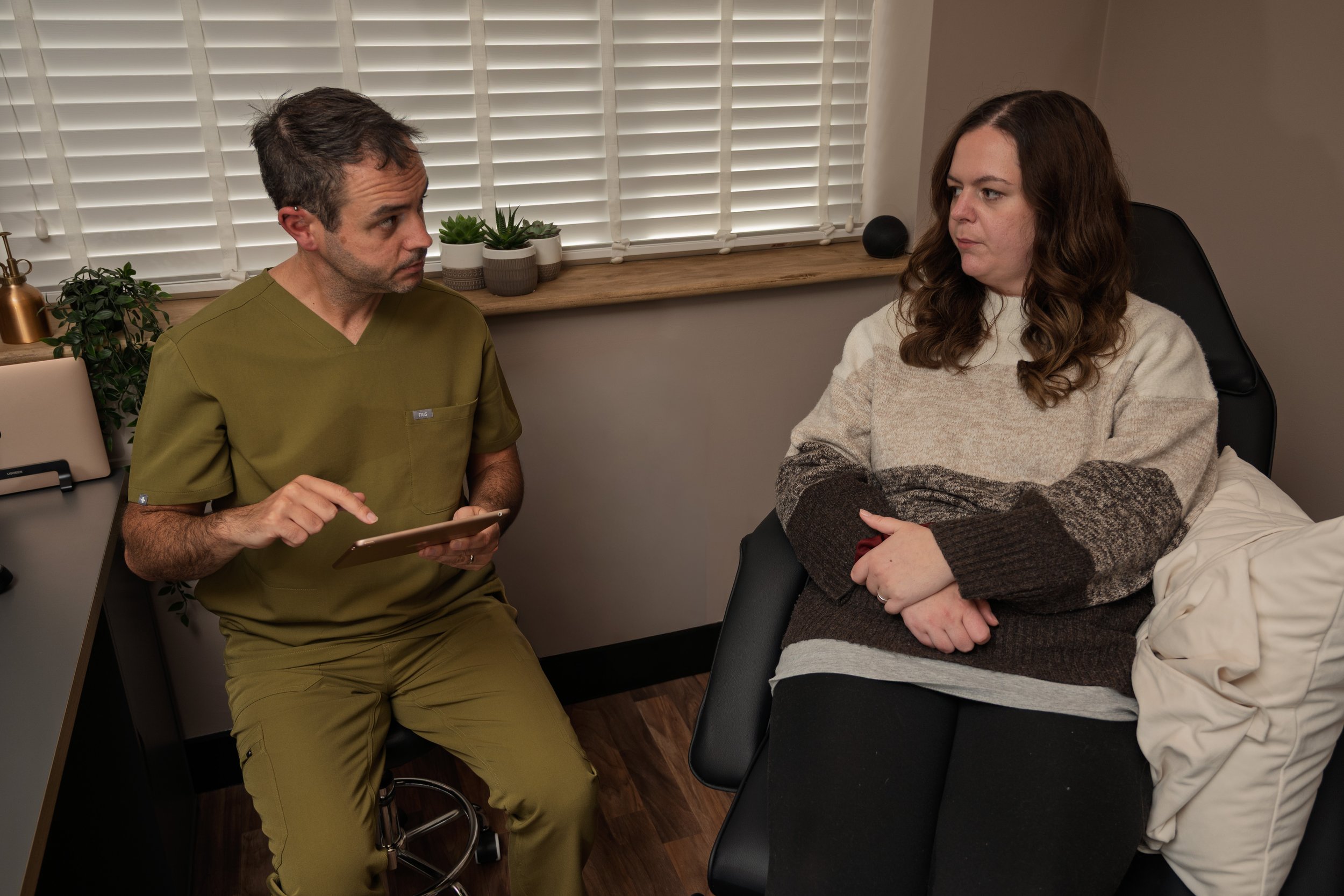
You may have one specific area that bothers you, or you may simply feel that something has changed and want an expert opinion. Your consultation is designed to look at the whole picture rather than starting with a treatment menu.

Upper-face lines
Common concerns include forehead lines, frown lines between the brows and lines around the eyes. We will look at how your face moves as well as how the lines appear when your expression is relaxed.
Jawline & neck
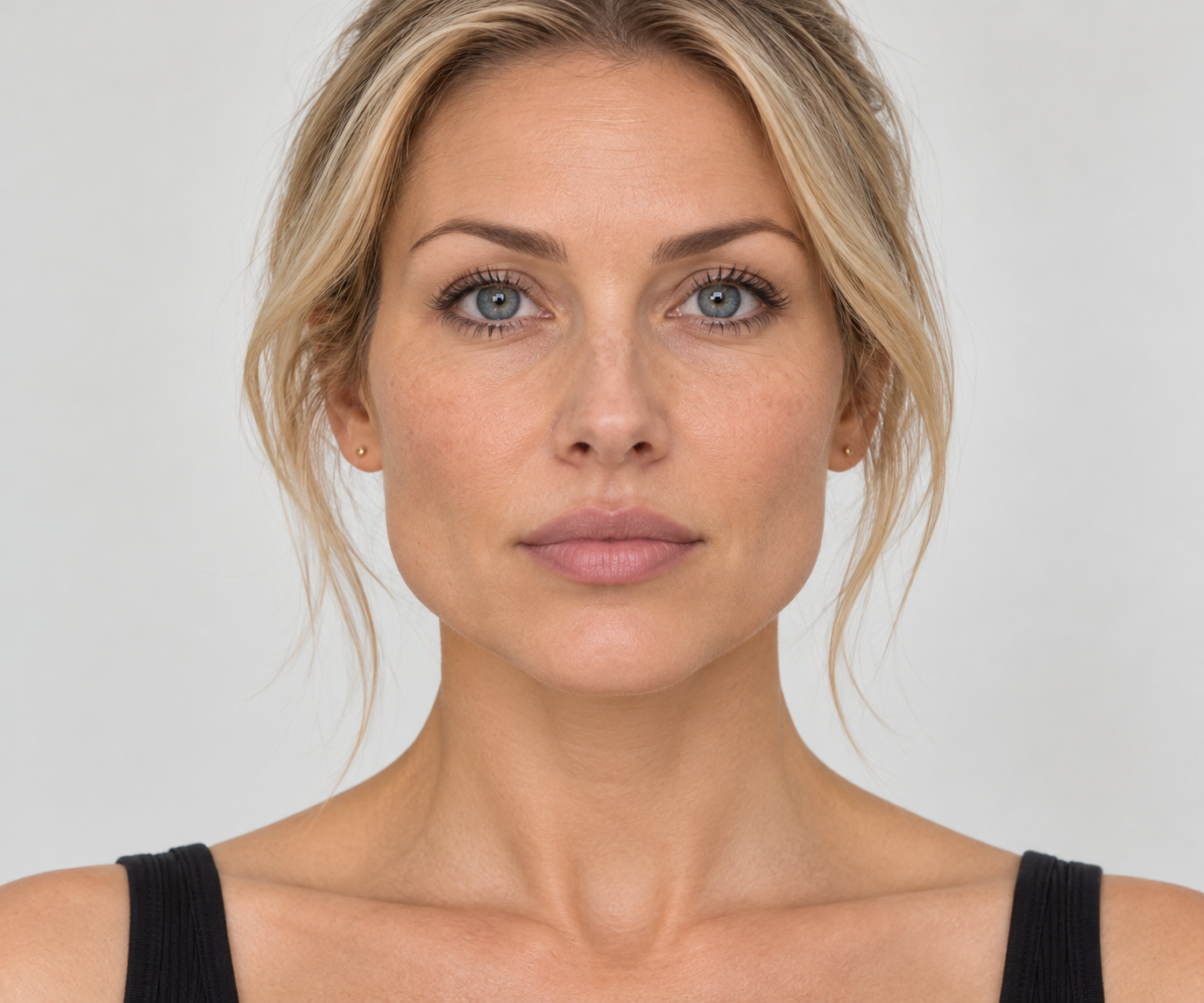
Concerns around jawline shape, muscle bulk or visible neck bands may also be suitable for assessment. These areas require an individual anatomical assessment rather than a standardised approach.
Focused facial concerns
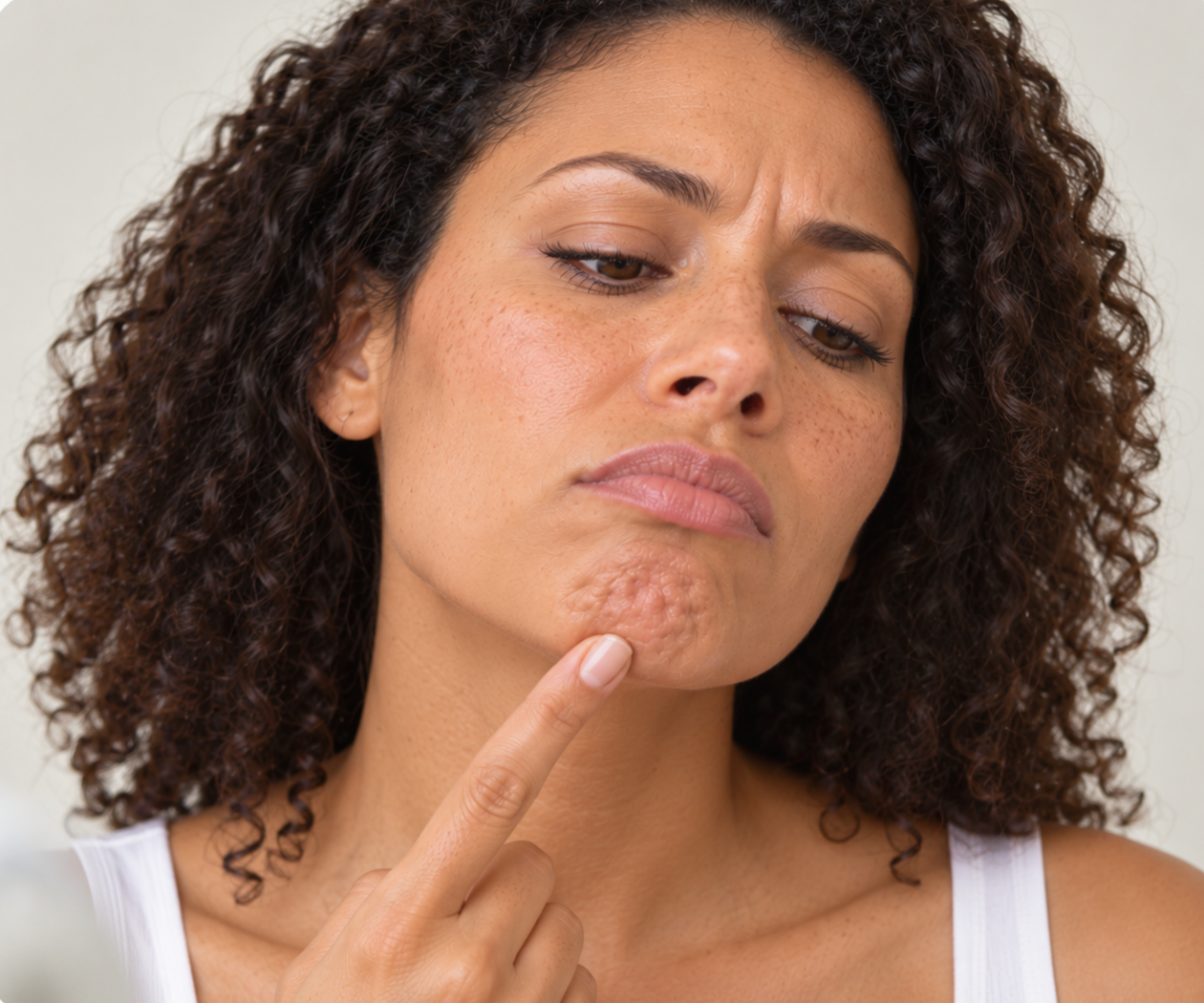
Some people are concerned about smaller areas such as nose lines, chin dimpling, a downturned smile, a gummy smile orupper-lip lines. These can be discussed as part of the same assessment where appropriate.
Your face is not a template.
The same line can have a different cause from one person to the next. That is why your consultation looks at more than the area you have noticed.
I will assess your facial movement, underlying anatomy, symmetry and the way different areas work together. We will also consider your skin quality, medical history and what you would realistically like to achieve.
Natural movement matters
The aim is not to remove every expression or make your face look unfamiliar. Where treatment is appropriate, the plan should respect how you naturally move and maintain a result that still looks like you.
Sometimes the right answer is no treatment
Not every concern needs treatment, and the treatment you initially had in mind may not be the most appropriate option. If I do not think treatment is likely to give you a worthwhile or suitable result, I will tell you.
What happens at your consultation?
Your consultation is a chance to talk through what you have noticed, what you would like to change and what outcome would feel right for you.
We will review your medical history, assess the relevant areas and discuss whether treatment is appropriate. You will have time to ask questions, understand the options and consider the benefits, limitations and possible risks before making any decision.
No pressure to decide on the day
You do not need to arrive knowing what treatment you want, and you will not be expected to make an immediate decision. The aim is to give you enough information to make a considered choice.
If treatment is appropriate
Any treatment plan will be personalised to your anatomy, facial movement and goals rather than based on a fixed number of areas or a standard template.
Review & follow-up
Where a treatment includes a planned review, this forms part of the same episode of care. It gives us an opportunity to assess the result, answer any questions and decide whether any clinically appropriate adjustment within the original treatment plan is needed.
Frequently asked questions
-
No. You can book because there is something you would like to discuss without knowing which treatment, if any, is right for you. Your consultation is designed to help work that out.
-
No single approach is suitable for every line or every person. Some concerns are influenced mainly by facial movement, while others relate more to skin quality, facial ageing or changes in underlying support. Your assessment helps determine what is actually contributing to the concern you have noticed.
-
The aim is not to remove all facial movement. Where treatment is appropriate, the plan is tailored to your anatomy and the way you naturally express yourself, with the intention of maintaining a balanced and natural appearance.
-
This varies depending on the treatment, the area being treated and the individual. Where treatment is recommended, we will discuss the expected duration and what ongoing maintenance may involve before you decide whether to proceed.
-
This depends on the treatment being considered. Some treatments may involve little interruption to normal activities, while others can cause temporary redness, swelling, bruising or other short-term effects. Relevant aftercare and expected recovery will be discussed with you in advance.
-
That is completely fine. A consultation does not commit you to treatment, and choosing not to proceed is always an acceptable outcome.
Not sure what you need?
You do not need to arrive with a treatment in mind.
If there is something about your lines, facial movement, jawline or another concern you would like to discuss, your consultation is the place to start. We can look at what is causing it, whether treatment is appropriate and what a realistic outcome might look like for you.
Guide prices
If you would like an idea of costs before booking, you can view the Milner Aesthetics treatment price guide.
Prices are provided for information only. Any treatment recommendation will depend on your consultation, individual anatomy, medical history, goals and clinical suitability, and you are under no obligation to proceed.
Want to ask a question first?